|
Christianshavn’ s Canals
It was once again King Christian IV (1577-1648 – ruled Denmark
and Norway 1588-1648) –who was called the great builder of
Copenhagen that took the initiative to found Christianshavn and
its canals from 1617 to 1622. The two main reasons were partly to
protect the fleet of the Royal Danish Navy, which was docked at
the harbour entrance called “Holmen” and to increase
trading with merchants from abroad to levy extra tolls from their
ships passing through the narrow strait between Zealand and the
Isle of Amager.
New merchant town
The new merchant town Christianshavn was named after the King and
situated on the Isles of Amager about 110 meter from the cost of
Zealand and divided by the waters of the inner harbour. Construction
work to establish Christianshavn started around 1617, where an artificial
bank of soil and rubble from the city was erected across the inner
harbour to the shores of Amager. When the embankment was built up,
the land filling work began to develop the Christianshavn district
with its new artificial waterways.
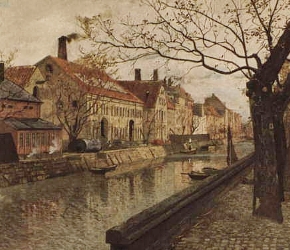
| Idyllic
painting of the Canals through the quarters of Christianshavn
around 1880 – where heavy industry and merchant
courtyards had occupied the areas alongside the canals
to utilize the artificial waterways for transportation. |
|
| Up
to the middle of the 20 century Christianshavn with its
canal system developed into a quite charming and trendy
residential area with plentiful of atmosphere and remarkable
old buildings formed mainly by Dutch architects around
1618. |
|
Bridges to Christianshavn
Even though the first bank with landfill over the harbour strait also
was a useful connection for peasants transporting crops to the mainland
from Amager, the embankment blocked for ships passage through the
harbour and was removed in 1618 in favor of the first wooden drawbridge
to Amager, which was completed around 1620 and operated by one man
called Hans Knip. The present “knippelsbro” is named after
Hans Knip and is built exactly where the first bridge to Amager was
located. Today four bridges connect Amager to Zealand – Knippelsbro
from 1937 - Langebro from 1954 – Kalvebrobroerne from 1987 and
last but not least the great Øresundsbro from 2000.
|
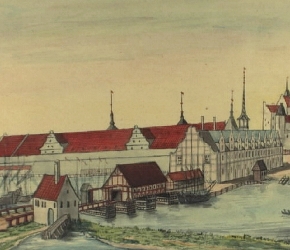
The
first bridge over the harbour strait seen from the Isle
of Amager towards inner Copenhagen with the old Stock
Exchange "Børsen" from 1620 and Copenhagen
Castle from 1418 in the back. The drawbridge was called
Hans Knip, who operated the drawbridge. The present
"Knippelsbro" from 1937 was later named after
Hans Knip.
|
|
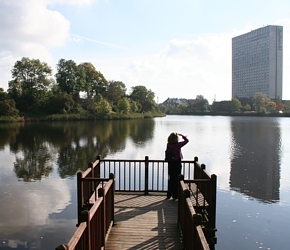
| King
Christian IV's Bastion and fortification from 1618 is
now turned into a peaceful park and recreation area, where
modern architecture faces the old fortress with its ramparts
and moats that once protected the citizens of Copenhagen
and Christianshavn. The fortification was in use and operating
until 1900s. |
|
Fortification
surrounded Christianshavn
Christianshavn was surrounded by a fortification with five bastions
that later developed into seven bastions to protect this little
city outside of Copenhagen and reinforcements occurred between 1780-1790
and again in 1810-1813 after the heavy bombardment of Copenhagen.
The fortification of Christianshavn from 1600s was operating until
1900s and later then reestablished into a public park that still
exists and in use today.
| The
Christianshavn quarters and neighbourhood is an architectural
gem for tourist and visitors that can experience houses
and building with a rich historic heritage from the time
of the establishment of Christianshavn. Many small boat
houses and canal restaurants are lined up alongside the
canal that are popular places to hang out and enjoy life
on a lazy sunny day. |
|
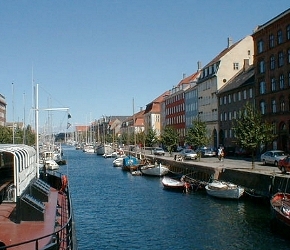
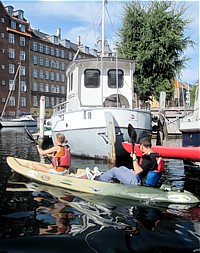
| The
canal of Christianshavn from 1617 offers its own charming
and cosy atmosphere with no similarity to other canal
cities. The narrow streets and colourful houses facing
the artificial waterways together with jovial locals and
tourists sitting on the edge of the canal pier enjoying
a bring-your-own beer is the heartbeat of the canal quarters
and residential culture. |
|
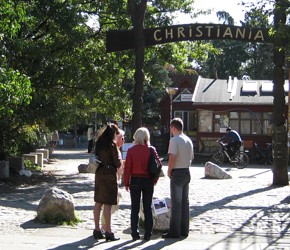
The present Christianshavn
King Christians IV’s Christianshavn with its canals from 1617
has develop - after years with heavy industrial activity - into
a quite charming and trendy residential area, with its own Free
City called “Christiania” established in old deserted
military barracks and a population over 10,000. The Christianshavn
quarters and neighborhood is an architectural gem for tourist and
visitors that can experience houses and building with a rich historic
heritage from the time of the establishment of Christianshavn -
like the preserved Artillery Barracks from 1664 called “Irgens
Gård” at Strandgade 44 – or all of the old house
around Wildersgade from 1700, as well as all the ancient buildings
lined up alongside the canals with every street named “Ovengade”
– Over the street.
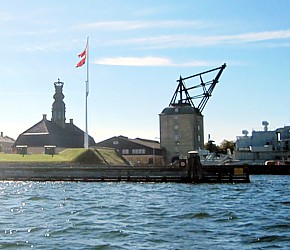
| One
of Copenhagen's most significant landmarks is the stationary
Mast Crane built during the reign of King Fredrik V in
1748-1751, that was used to hoist the huge masts of the
naval battle ships. The old Mast Crane is placed on the
prehistoric naval base on Nyholm, which is situated right
beside the district of Christianshavn and is visible when
entering the inner harbour of Copenhagen. |
|
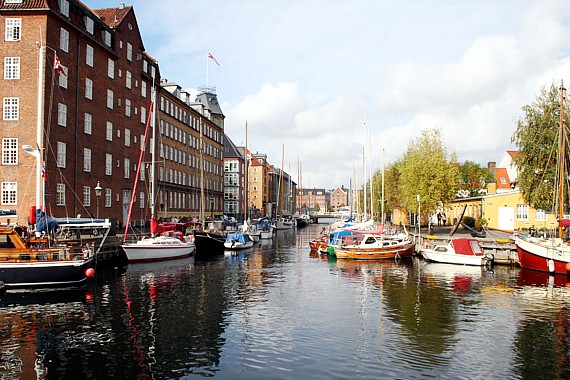
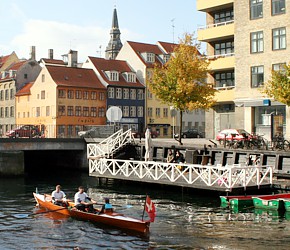
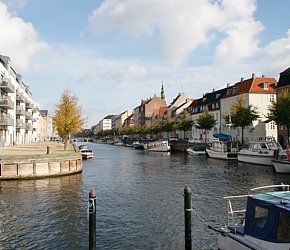
| New
and old buildings are painstakingly placed side by side
around the canal system together with all types of boats
and old vessels that are moored alongside the quay and
adjoining streets in great harmony with the architectural
environment from the establishment of Christianshavn
up to our time. The spire of The Church of Our Saviour
from 1696 is seen over the rooftops.
|
|
The
present Christianshavn’s Canal
Venice is world-famous for its 150 canals - built on an archipelago
of 118 islands as well as Amsterdam with it beautiful concentric
canal system and without any comparison, the canals of Christianshavn
from 1617 has also its own special and cosy atmosphere however in
a smaller scale, with old historic buildings facing the artificial
waterways and lovial locals enjoying life in full scale sitting
on the edge of the canal pier with a bring-your-own beer refreshment.
This bustling and energetic part of a city in a major capital that
is divided by the cool and fresh water and breeze from Copenhagen
harbour and surrounded by the peaceful tranquillity of canals filled
with old wooden ships and plentiful of shops, restaurants, cafes
and most of all the large popular park area built on the remains
of King Christian IV’s old fortification from 1618.
Christianshavn
with its picturesque canals and old buildings together with its
free city "Christiania" is a popular tourist attraction
visited by thousands every year.
Location
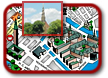
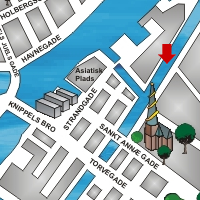
Christianshavn and the canals are located on the east side of Copenhagen
- on the Isle of Amager. Here are tourists venues like the Bastions
of Copenhagen from 1618 - The Church of Our Saviour from 1696 -
Christian's Church from around 1748 - The Naval Museum – The
Naval Base and Docks “Holmen” from 1739 - The new “Opera
House”.
Christianshavn
and Canals
Address
The Christianshavn District
Copenhagen K
Busses: 40 - 66 - 2A – 350S - 871
Metro - Christianshavn Station
|
|
|